



Learn what is Social Media Marketing (SMM) is, how it works, its benefits, key platforms, and proven strategies for beginners. This complete 2026 guide helps businesses build brand awareness, engage audiences, and grow online

What Is Social Media Marketing? A Complete Beginner’s Guide (2026)
Introduction:
In today’s digital-first world, having a website alone is no longer enough to grow a business. Your customers spend hours every day scrolling through their favorite Social Media Platforms, discovering new brands, watching videos, reading reviews, and making purchasing decisions. Whether it’s a local coffee shop sharing behind-the-scenes videos, an online clothing store launching a new collection, or a software company educating professionals through LinkedIn posts, businesses of every size are using Social Media Marketing (SMM) to connect with people where they spend their time.
But what exactly is Social Media Marketing, and why has it become one of the most powerful digital marketing channels in 2026?
Simply put, Social Media Marketing (SMM) is the process of using social media networks to promote a business, build relationships with customers, increase Brand Awareness, drive website traffic, generate leads, and ultimately boost sales. It involves much more than simply posting pictures or videos. Successful brands rely on a well-planned Social Media Strategy, consistent Content Creation, meaningful customer interactions, and data-driven decision-making.
The rise of AI-powered tools, short-form video content, social commerce, and evolving platform algorithms has transformed how businesses communicate with their audiences. Today, marketers must understand not only how to publish content but also how to analyze results, engage communities, and optimize campaigns for better performance.
Whether you’re a beginner, entrepreneur, freelancer, content creator, or small business owner, this guide will help you understand the fundamentals of Social Media Marketing and show you how to build a strong online presence in an increasingly competitive digital landscape.
What Is Social Media Marketing (SMM)?
Social Media Marketing (SMM) is a digital marketing technique that uses social networking platforms to promote products, services, or personal brands while building lasting relationships with a Target Audience.
Instead of relying solely on traditional advertising, businesses create valuable content, engage with followers, answer customer questions, run advertising campaigns, collaborate with creators, and build communities that encourage trust and loyalty.
A successful Social Media Strategy focuses on delivering the right message to the right people at the right time. It combines creativity with analytics to ensure every post contributes toward measurable business goals.
For example:
- A restaurant shares daily food photos and customer reviews on Instagram.
- A software company publishes educational tips on LinkedIn.
- A fitness coach uploads workout videos on YouTube.
- A fashion brand collaborates with influencers on TikTok.
- A local business answers customer inquiries through Facebook Messenger.
Each business uses different methods, but all of them are practicing Social Media Marketing.
Why Is Social Media Marketing Important in 2026?
The digital landscape continues to evolve rapidly, making social media one of the most influential channels for businesses of every size.
Consumers now expect brands to be active, responsive, and authentic. Before making a purchase, many people check a company’s social profiles, read customer reviews, watch videos, and explore comments to evaluate credibility.
Modern consumers don’t simply buy products—they buy experiences, communities, and trust.
Some of the biggest reasons businesses invest in Social Media Marketing include:
- Building strong Brand Awareness
- Increasing website traffic
- Improving Customer Engagement
- Growing loyal online communities
- Supporting customer service
- Driving Lead Generation
- Increasing online sales
- Building long-term customer relationships
- Strengthening Online Brand Presence
- Staying competitive in their industry
Businesses that consistently provide value through social media often enjoy higher customer loyalty and stronger brand recognition than those relying only on traditional advertising.

How Does Social Media Marketing Work?
Many beginners assume that Social Media Marketing simply means posting regularly. In reality, every successful campaign follows a structured process.
Step 1: Understand Your Target Audience:
Before creating any content, identify your ideal customer.
Ask questions such as:
- Who are they?
- What problems do they have?
- Which platforms do they use?
- What type of content do they enjoy?
- When are they most active?
Creating a detailed customer profile helps businesses produce content that genuinely resonates with their audience instead of guessing what might work.
Step 2: Choose the Right Social Media Platforms:
Not every platform serves the same purpose.
Different audiences prefer different platforms depending on age, interests, and behavior.
For example:
| Platform | Best For |
|---|---|
| Local businesses, communities, paid advertising | |
| Lifestyle brands, fashion, travel, creators | |
| B2B marketing, professionals, recruitment | |
| TikTok | Viral short-form videos and younger audiences |
| YouTube | Tutorials, product demonstrations, education |
| DIY, home décor, recipes, eCommerce inspiration | |
| X (Twitter) | News, trends, customer support, real-time conversations |
Choosing the right platform allows businesses to maximize resources while reaching the most relevant audience.
Step 3: Create Valuable Content:
At the heart of every successful strategy lies consistent Content Creation.
People don’t follow brands because they constantly advertise products. They follow brands that educate, entertain, inspire, or solve problems.
Effective content may include:
- Educational posts
- Infographics
- Tutorials
- Behind-the-scenes videos
- Product demonstrations
- Customer testimonials
- Industry news
- Polls and quizzes
- Live sessions
- Success stories
High-quality content builds trust long before customers decide to make a purchase.
Step 4: Engage With Your Community:
Social media isn’t a one-way communication channel.
Successful brands actively participate in conversations by:
- Responding to comments
- Replying to messages
- Answering customer questions
- Thanking followers
- Encouraging discussions
- Sharing customer experiences
Consistent interaction helps create a loyal community around your brand.
Key Benefits of Social Media Marketing
Businesses continue investing in social media because it delivers measurable business results across every stage of the customer journey.
1. Increases Brand Awareness:
Millions of people browse social media daily. Consistent posting introduces your brand to new audiences while keeping existing followers engaged.
Even users who don’t purchase immediately become familiar with your business, making future conversions more likely.
2. Builds Customer Trust:
Modern customers appreciate transparency.
Sharing educational content, behind-the-scenes updates, testimonials, and company stories helps humanize your brand and build long-term credibility.
3. Generates Quality Leads:
One of the greatest advantages of Social Media Marketing is its ability to support Lead Generation.
Whether through downloadable resources, webinars, contact forms, or direct messages, businesses can convert interested users into potential customers.
4. Improves Customer Engagement:
Likes, comments, shares, saves, messages, and mentions all contribute to stronger Customer Engagement.
The more people interact with your content, the stronger your relationship becomes with your audience.
5. Drives Website Traffic:
Every valuable social media post creates opportunities for users to visit your website, read blogs, explore products, or request services.
Social platforms often become an important source of referral traffic.
6. Supports Business Growth:
Consistent branding, regular engagement, valuable content, and customer trust combine to create sustainable business growth over time.
Unlike traditional advertising, social media allows businesses to build long-term relationships instead of one-time transactions.
The Core Elements of a Successful Social Media Strategy
Successful brands rarely post randomly. Every action supports a clear objective.
The foundation of an effective Social Media Strategy includes:
Clear Goals:
Define what success looks like.
Examples include:
- Increase brand awareness
- Generate leads
- Grow followers
- Increase website traffic
- Improve customer support
- Increase product sales
Building a Winning Social Media Marketing Strategy (2026)

In Part 1, you learned the fundamentals of Social Media Marketing (SMM), why it matters, and how businesses use it to build meaningful relationships with customers. Now it’s time to dive deeper into the strategies and tools that turn social media into a powerful business growth engine.
From selecting the right platform to planning a Content Calendar, creating engaging posts, leveraging Influencer Marketing, and measuring success with Social Media Analytics, this section will help you build a strong foundation for long-term success.
Choosing the Right Social Media Platforms
One of the biggest mistakes beginners make is trying to be active on every social media platform. Instead, focus on the platforms where your Target Audience spends the most time.
Each platform serves a unique purpose and attracts different demographics.
Facebook Marketing:
Despite the rise of newer platforms, Facebook Marketing remains one of the most effective ways to connect with local communities and businesses. Facebook offers business pages, groups, events, Messenger, and one of the world’s most advanced advertising systems.
Facebook works best for:
- Local businesses
- Service providers
- Community building
- Event promotions
- Customer support
- Lead generation campaigns
Instagram Marketing:
Instagram Marketing focuses on visual storytelling. It allows businesses to showcase products, services, company culture, and customer experiences through high-quality images and videos.
Popular Instagram content formats include:
- Feed Posts
- Stories
- Instagram Reels
- Carousel Posts
- Live Videos
- Guides
Instagram is especially valuable for industries such as:
- Fashion
- Beauty
- Food
- Fitness
- Travel
- Interior Design
- Personal Branding
LinkedIn Marketing:
LinkedIn Marketing is the preferred platform for professionals and B2B companies. Businesses use LinkedIn to build authority, generate leads, recruit talent, and share industry knowledge.
Effective LinkedIn content includes:
- Industry insights
- Case studies
- Company updates
- Employee achievements
- Educational articles
- Professional networking
TikTok Marketing:
TikTok Marketing has transformed how brands connect with younger audiences through entertaining and educational Short-Form Video content.
Brands succeeding on TikTok often focus on:
- Trends
- Challenges
- Product demonstrations
- Tutorials
- Behind-the-scenes content
- Storytelling
Authenticity usually performs better than highly polished advertisements.
YouTube Marketing:
YouTube Marketing is ideal for businesses that want to educate customers through long-form videos.
Popular video formats include:
- Tutorials
- Product reviews
- Webinars
- How-to videos
- Customer testimonials
- Interviews
Unlike many platforms, YouTube content can continue generating views and traffic for years.
Pinterest Marketing:
Pinterest Marketing is a visual search engine that helps users discover ideas and products.
Businesses in the following industries often perform well:
- Home Decor
- DIY
- Fashion
- Recipes
- Weddings
- Lifestyle
- E-commerce
Pinterest Pins can drive website traffic long after publication.
X (Twitter) Marketing:
X (Twitter) Marketing focuses on real-time communication.
Businesses use X for:
- Industry news
- Product announcements
- Customer support
- Live event updates
- Brand conversations
Fast responses and active participation help build credibility.
Creating High-Quality Content That People Actually Want
Excellent Content Creation is the heart of every successful social media strategy.
People rarely engage with promotional posts alone. Instead, they interact with content that educates, entertains, inspires, or solves problems.
A balanced content mix might include:
- Educational tips
- Industry news
- Customer success stories
- Product tutorials
- FAQs
- Behind-the-scenes content
- Employee spotlights
- Polls
- Quizzes
- Infographics
The more value your content provides, the stronger your relationship with your audience becomes.
Why Visual Content Dominates Social Media
Humans process visuals significantly faster than text, making Visual Content essential for capturing attention.
Examples include:
- High-quality images
- Infographics
- Animated graphics
- Carousels
- Product photos
- Memes
- GIFs
- Branded graphics
Maintaining a consistent visual identity strengthens Brand Identity and improves recognition across platforms.
The Rise of Video Marketing

Consumers increasingly prefer watching videos over reading long blocks of text.
Video Marketing allows businesses to explain products, educate audiences, and build trust more effectively.
Popular video formats include:
- Tutorials
- Product demonstrations
- Interviews
- Customer testimonials
- Brand stories
- Educational videos
- Q&A sessions
Why Short-Form Video Is Essential
Platforms now prioritize Short-Form Video because it captures attention quickly and encourages higher engagement.
Examples include:
- Instagram Reels
- TikTok Videos
- YouTube Shorts
- Facebook Reels
Short videos are excellent for:
- Product showcases
- Quick tips
- Customer testimonials
- Trends
- Before-and-after demonstrations
Live Streaming Builds Authentic Relationships
Unlike edited videos, Live Streaming creates real-time interaction between businesses and their audience.
Popular live content includes:
- Product launches
- Q&A sessions
- Behind-the-scenes tours
- Live tutorials
- Interviews
- Events
Live sessions encourage trust because audiences see authentic conversations rather than scripted advertisements.
Planning Content with a Content Calendar

One of the easiest ways to remain consistent is by using a Content Calendar.
Instead of deciding what to post each day, successful marketers schedule content weeks or months in advance.
A content calendar typically includes:
- Publishing dates
- Platform selection
- Content format
- Captions
- Hashtags
- Images
- Videos
- Campaign goals
Benefits include:
- Better consistency
- Improved organization
- Reduced last-minute stress
- Stronger campaign planning
- Easier team collaboration
Organic Reach vs Paid Social Media Advertising
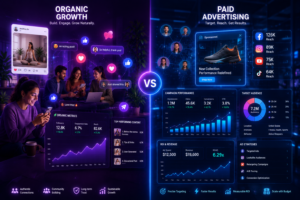
Businesses generally use two approaches to reach customers.
Organic Reach:
Organic Reach refers to people who discover your content naturally without paid promotion.
Organic strategies include:
- Educational posts
- Helpful videos
- Community engagement
- Hashtag optimization
- Regular publishing
Organic growth builds trust over time but requires patience.
Paid Social Media Advertising:
Paid Social Media Advertising helps businesses reach highly targeted audiences faster.
Benefits include:
- Immediate visibility
- Advanced audience targeting
- Faster lead generation
- Increased sales
- Better campaign scalability
Paid campaigns are especially effective when launching new products or entering competitive markets.
Understanding Social Media Advertising
Modern Social Media Advertising platforms allow advertisers to target users based on:
- Age
- Gender
- Location
- Interests
- Online behavior
- Purchase history
- Job title
- Education
This precision helps businesses maximize advertising budgets while improving campaign performance.
Influencer Marketing: Building Trust Through Creators

Today’s consumers often trust creators more than traditional advertisements.
Influencer Marketing involves collaborating with creators who already have loyal audiences.
Businesses partner with:
- Nano Influencers
- Micro Influencers
- Macro Influencers
- Industry Experts
- Content Creators
Influencer campaigns can increase:
- Brand Awareness
- Product credibility
- Website traffic
- Customer trust
- Sales
The Power of User-Generated Content (UGC)

User-Generated Content (UGC) refers to photos, videos, reviews, or testimonials created by customers instead of brands.
Examples include:
- Customer product photos
- Video reviews
- Social media mentions
- Testimonials
- Unboxing videos
UGC strengthens trust because people naturally value recommendations from real customers.
Social Commerce Is Changing Online Shopping

Social Commerce allows customers to purchase products directly within social media apps.
Platforms now support:
- Product catalogs
- In-app checkout
- Live shopping
- Product tagging
Businesses reduce friction by allowing customers to complete purchases without leaving the platform.
Listening Before Speaking: Social Listening

Successful brands don’t only publish content—they also monitor conversations.
Social Listening helps businesses understand:
- Customer opinions
- Brand mentions
- Industry trends
- Competitor activity
- Customer feedback
Listening helps businesses improve products, campaigns, and customer experiences.
Community Management: Turning Followers into Loyal Fans

Growing followers is only part of the equation.
Strong Community Management focuses on building genuine relationships through:
- Responding to comments
- Answering messages
- Resolving complaints
- Encouraging conversations
- Celebrating customer success
- Sharing user content
Communities often become a brand’s strongest marketing asset.
Social Media Management: Keeping Everything Organized
As businesses grow, managing multiple platforms becomes increasingly complex.
Social Media Management involves:
- Content planning
- Scheduling
- Community engagement
- Campaign management
- Analytics reporting
- Team collaboration
Professional management ensures every platform remains active and aligned with business goals.
AI-Powered Content Creation and Marketing Automation

Artificial intelligence has become an essential tool for marketers in 2026.
AI-Powered Content Creation helps businesses:
- Generate post ideas
- Write captions
- Create visuals
- Repurpose content
- Analyze trends
Meanwhile, Marketing Automation simplifies repetitive tasks such as:
- Scheduling posts
- Sending reminders
- Responding to messages
- Lead nurturing
- Campaign reporting
AI doesn’t replace creativity—it enhances productivity and frees marketers to focus on strategy.
Measuring Success with Social Media Analytics
Publishing content without analyzing results is like driving without a map.
Social Media Analytics provides insights into what’s working and what needs improvement.
Regular reporting helps businesses optimize campaigns, improve content, and maximize results.
Important KPIs Every Beginner Should Track
The most successful marketers rely on Key Performance Indicators (KPIs) to measure campaign performance.
Essential KPIs include:
Engagement Rate:
Your Engagement Rate measures how actively users interact with your content through likes, comments, shares, saves, and clicks.
Higher engagement usually indicates valuable content.
Reach and Impressions:
Reach and Impressions help measure visibility.
- Reach = Number of unique users who saw your content.
- Impressions = Total number of times your content was displayed.
Tracking both helps evaluate brand exposure.
Click-Through Rate (CTR):
Click-Through Rate (CTR) shows how many people clicked your link after seeing your post or advertisement.
A higher CTR often indicates compelling headlines, visuals, and calls to action.
Conversion Rate:
Your Conversion Rate measures how many visitors complete a desired action, such as:
- Making a purchase
- Filling out a form
- Booking a consultation
- Downloading a guide
Improving conversion rates directly impacts revenue.
Return on Investment (ROI):
Every marketing campaign should ultimately contribute to business growth.
Return on Investment (ROI) compares campaign costs with the revenue or value generated, helping businesses determine whether their efforts are profitable.
Audience Insights and Performance Metrics:
Modern platforms provide detailed Audience Insights such as age, gender, location, interests, and active hours. Combined with Performance Metrics, these insights help refine content, posting schedules, and targeting for better results.
Step-by-Step Guide to Launch Your First Social Media Campaign
A successful Social Media Campaign doesn’t happen by chance. It requires planning, consistency, and continuous optimization.
Step 1: Define Your Goals:
Every campaign should begin with a clear objective. Ask yourself:
- Do you want to increase Brand Awareness?
- Are you looking to improve Lead Generation?
- Do you want more website traffic?
- Is your goal to increase sales?
- Are you trying to build a loyal community?
Having one primary goal makes it easier to measure success.
Step 2: Create Your Buyer Persona:
Before creating content, understand exactly who you’re speaking to.
A Buyer Persona is a detailed profile of your ideal customer based on real data and research.
Include details such as:
- Age
- Gender
- Location
- Occupation
- Income level
- Interests
- Challenges
- Buying behavior
- Preferred social media platform
For example:
A fitness brand may target working professionals aged 25–40 who are interested in home workouts, healthy recipes, and wellness tips.
The more detailed your persona, the easier it becomes to create relevant content.
Step 3: Build a Marketing Funnel:
Every customer goes through different stages before making a purchase.
An effective Marketing Funnel includes:
Awareness
Potential customers discover your business through educational posts, videos, or advertisements.
Consideration
They begin comparing your products with competitors, read reviews, watch tutorials, and explore your website.
Decision
They trust your brand enough to make a purchase or contact your business.
Retention
Continue engaging customers through valuable content, exclusive offers, and excellent customer service to encourage repeat business.
Step 4: Create Valuable Content:
People don’t want endless advertisements.
Instead, create content that answers questions, solves problems, and entertains.
A balanced content strategy may include:
- Educational tips
- Industry updates
- Product demonstrations
- Customer success stories
- Behind-the-scenes videos
- Infographics
- Interactive polls
- FAQs
- Expert advice
- Seasonal campaigns
Remember, every piece of content should provide value before asking for a sale.
Step 5: Write Strong Call-to-Actions (CTA):
A good Call-to-Action (CTA) tells your audience what to do next.
Examples include:
- Learn More
- Download Now
- Shop Today
- Book a Free Consultation
- Contact Us
- Subscribe
- Get Started
- Watch the Full Video
- Join Our Community
Without a CTA, even excellent content may fail to generate results.
Step 6: Publish Consistently:
Consistency builds trust.
Whether you publish three times a week or daily, maintain a predictable schedule.
Businesses that disappear for weeks often lose momentum and audience interest.
Step 7: Analyze and Improve:
After launching your campaign, review your data regularly.
Questions to ask include:
- Which posts received the highest engagement?
- Which platform generated the most traffic?
- Which content produced the highest conversions?
- What time generated the best results?
Continuous improvement is the secret behind long-term success.
Best Practices for Improving Audience Engagement
Growing followers is only part of the journey.
The real goal is increasing Audience Engagement.
Here are proven methods:
Ask Questions:
Encourage conversations instead of broadcasting messages.
Example:
“What social media platform brings your business the most leads?”
Reply Quickly:
Responding to comments and messages builds stronger relationships and increases trust.
Encourage User Participation:
Ask customers to share:
- Reviews
- Photos
- Testimonials
- Success stories
This also increases valuable User-Generated Content (UGC).
Run Contests and Giveaways:
Simple contests encourage more shares, comments, and brand visibility.
Use Polls and Quizzes:
Interactive content often generates higher engagement than standard promotional posts.
Common Social Media Marketing Mistakes Beginners Should Avoid
Even experienced marketers make mistakes.
Avoid these common problems:
Posting Without a Strategy:
Random posting usually produces random results.
Always follow a structured Social Media Strategy.
Ignoring Analytics:
Never assume your content is performing well.
Use Social Media Analytics to understand what your audience actually enjoys.
Selling Too Often:
If every post promotes a product, people lose interest.
A useful rule is the 80/20 principle:
- 80% educational or entertaining content
- 20% promotional content
Inconsistent Branding:
Maintain consistent:
- Colors
- Fonts
- Logo
- Messaging
- Tone of voice
Consistency strengthens Brand Identity.
Ignoring Customer Messages:
Fast responses improve Customer Engagement and build loyalty.
People appreciate businesses that communicate.
Copying Competitors:
Learn from competitors but create your own voice.
Original content always performs better over the long term.
Future Trends in Social Media Marketing (2026)
The digital landscape changes every year.
Businesses that adapt early often gain a competitive advantage.
Artificial Intelligence Will Continue Growing:
AI tools will increasingly help businesses with:
- Caption writing
- Image generation
- Video editing
- Customer support
- Content recommendations
- Campaign optimization
Human creativity combined with AI productivity creates the best results.
Video Will Continue Dominating:
Consumers increasingly prefer watching videos over reading text.
Brands should invest in:
- Tutorials
- Product demos
- Educational videos
- Customer testimonials
- Short-form content
Short-Form Video Will Lead Engagement:
Platforms continue prioritizing:
- Instagram Reels
- TikTok
- YouTube Shorts
- Facebook Reels
Quick, informative videos often outperform traditional image posts.
Social Commerce Will Expand:
Customers increasingly purchase products directly inside social apps.
Expect more growth in:
- Live shopping
- Product tagging
- In-app checkout
- Personalized recommendations
Authenticity Will Matter More Than Perfection:
Highly polished advertisements are becoming less effective.
Audiences prefer:
- Behind-the-scenes content
- Honest conversations
- Real customer stories
- Employee-generated content
- Authentic brand personalities
Essential Tools Every Beginner Should Consider
Managing multiple platforms becomes easier with the right tools.
Popular categories include:
Content Design
- Canva
- Adobe Express
Scheduling
- Buffer
- Hootsuite
- Later
Analytics
- Meta Business Suite
- Google Analytics
- Platform Insights
Video Editing
- CapCut
- Adobe Premiere Rush
AI Assistance
- ChatGPT
- Gemini
- Claude
Choose tools that match your workflow and budget rather than trying to use everything at once.
Frequently Asked Questions (FAQs)
1. What is Social Media Marketing?
Social Media Marketing is the process of using social media platforms to promote products, services, or brands, build relationships with audiences, and achieve marketing goals such as brand awareness, lead generation, and sales.
2. Which social media platform is best for beginners?
The best platform depends on your audience:
- Instagram for visual brands
- Facebook for local businesses
- LinkedIn for B2B companies
- TikTok for younger audiences
- YouTube for educational content
- Pinterest for lifestyle and eCommerce brands
3. Is Social Media Marketing free?
Creating organic content is generally free, but businesses often invest in paid advertising, content creation, and management tools to accelerate growth.
4. How long does Social Media Marketing take to show results?
Organic strategies may take several months to build momentum, while paid campaigns can deliver faster visibility. Consistency and optimization are key to achieving sustainable results.
5. Can small businesses benefit from Social Media Marketing?
Absolutely. Small businesses can build brand awareness, connect with local customers, generate leads, and compete effectively with larger brands by creating valuable content and engaging consistently.
Conclusion
Social Media Marketing (SMM) has evolved into one of the most valuable digital marketing channels for businesses of every size. It is no longer just about posting updates—it’s about building meaningful relationships, creating valuable content, understanding customer behavior, and using data to make smarter decisions.
Success starts with a clear Social Media Strategy, a deep understanding of your Target Audience, and a commitment to delivering consistent value. By choosing the right Social Media Platforms, creating engaging Visual Content, leveraging Video Marketing, encouraging Audience Engagement, and tracking important metrics such as Engagement Rate, Click-Through Rate (CTR), Conversion Rate, and Return on Investment (ROI), businesses can achieve measurable and sustainable growth.
As social media continues to evolve with AI, automation, and new platform features, staying informed and adaptable will be your greatest advantage. Focus on authenticity, provide value before promotion, and continuously refine your approach based on insights and performance data.
Whether you’re a startup, freelancer, local business, or established brand, now is the perfect time to build a stronger Online Brand Presence. Start small, stay consistent, listen to your audience, and remember that every successful social media strategy begins with understanding the people you’re trying to serve.
Final Takeaway
The future of social media belongs to brands that educate, engage, and inspire. Begin with a clear plan, create content that solves real problems, measure your results, and keep improving. Over time, your efforts will translate into stronger relationships, greater visibility, and long-term business success.
If you’re wondering **what is Social Media Marketing**, the answer goes far beyond simply posting content on Facebook or Instagram. It is a strategic process that helps businesses connect with customers, build trust, and achieve measurable marketing goals.
Many beginners search online asking, **”What is Social Media Marketing?”** because they want to understand how businesses attract customers through social platforms. Understanding this concept is the first step toward building a successful digital presence.
To fully understand **what is Social Media Marketing**, it’s important to see how different activities like content planning, customer engagement, analytics, and advertising work together to achieve business objectives.
Learning **what is Social Media Marketing** also helps businesses recognize why companies invest heavily in social platforms to increase visibility, generate leads, and improve customer relationships.
After understanding **what is Social Media Marketing**, the next step is selecting the right platforms where your audience spends the most time.
A complete understanding of **what is Social Media Marketing** includes knowing the difference between organic growth and paid advertising strategies.
One important aspect of **what is Social Media Marketing** is measuring campaign performance through analytics rather than relying on assumptions.
Now that you know **what is Social Media Marketing**, it’s time to create your first campaign using a structured approach.
## What Is Social Media Marketing?
**What is Social Media Marketing?** It is the process of using social media platforms to promote businesses, engage audiences, build brand awareness, and achieve marketing goals through both organic and paid strategies.
If you’ve been wondering **what is Social Media Marketing**, the answer is simple: it’s one of the most powerful digital marketing strategies for connecting with customers, building trust, and growing a business online. From creating valuable content to analyzing campaign performance, Social Media Marketing helps brands establish a lasting online presence.
This improves user experience and can help with sitelinks in search results.
Example: